Table of Contents
Exploring ABA Therapy for Toddlers: A Parent’s Guide
When exploring aba therapy toddlers, parents often wonder what it entails. Applied Behavior Analysis (ABA) is a science-based approach that uses positive reinforcement to teach meaningful skills like communication and social interaction. For toddlers, our therapy is play-based, naturalistic, and child-led, ensuring each session feels warm and supportive.
Our early intervention aba strategies harness the critical window of toddler development, a time when young brains are most receptive to learning. By starting early, many children reach important aba therapy developmental milestones—like making requests, sharing attention, or engaging in purposeful play. We weave your family’s routines into each individualized plan, offering guidance every step of the way. Imagine your toddler learning to ask for a favorite toy during a fun, play-based session; that’s how we build skills naturally. Our approach to behavioral therapy is rooted in years of experience and a deep understanding of child development. We also help verify insurance benefits so you can focus on what matters most—your child’s progress.
If you’re ready to see your child thrive, Start Your Child’s Journey with us. We invite you to connect with our team and discover how our individualized, play-based approach can make a difference. We’re All About You, Your Family, and Your Child. Promoting First Moments and Family Smiles Everywhere.
Early Intervention ABA Therapy for Toddlers: Core Principles
Now, let’s explore the core principles of early intervention ABA for toddlers.
What Is Early Intervention ABA?
Early intervention ABA therapy for toddlers is designed for children between ages one and three, focusing on building foundational communication, social, and self-help skills. We deliver these services through naturalistic, early intervention ABA strategies that take place in comfortable settings like your home or daycare. Rather than sitting at a table, our therapists follow your child’s lead, embedding learning opportunities into the activities they already love. This child-led approach does not aim for a cure but instead uses play and positive reinforcement to spark meaningful progress. Research from the National Library of Medicine supports that starting ABA early, while the brain is most flexible, leads to significant developmental gains. By tailoring each program to your toddler’s unique interests, we create a warm and supportive space where every step builds confidence.
How ABA Targets Developmental Milestones
We address developmental milestones across three key areas: communication, social interaction, and daily living. For communication, we teach skills like requesting, labeling, and early speech sounds, breaking each into small, achievable steps. Our approach to ABA therapy developmental milestones uses your child’s favorite toys and activities to motivate engagement and natural imitation. Social milestones, such as joint attention, turn-taking, and imitation, are woven into playful routines so your toddler learns to connect with others effortlessly. Daily living skills, including feeding, dressing, and toileting readiness, are introduced gradually with gentle reinforcement. We design our programs based on findings from leading ABA therapy studies that show measurable gains in communication and social skills. Every goal is individualized, and we track progress with data to adjust strategies as your child flourishes.
The Role of Parent Training in Early ABA
Parent involvement is the cornerstone of successful early ABA therapy for toddlers. When families use consistent strategies at home, children master skills faster and generalize them across settings. Our parent training includes hands-on coaching where we model techniques like prompting, reinforcement, and shaping, then give you feedback as you practice. Through these sessions, you learn to turn everyday moments—mealtime, bath time, play—into teaching opportunities. We empower you with tools and resources so that you feel confident supporting your child’s growth. At All About ABA, we view parent training as an ongoing partnership, integral to Your Child’s Journey. With your dedication and our guidance, your toddler makes strides that extend far beyond our therapy sessions. We’re All About You, your family, and your child.
With these principles in mind, we’ll next look at the hands-on strategies we use to put them into action.
Benefits of ABA Therapy for Toddlers and Families
Now that you understand what ABA therapy is, let’s explore how it specifically benefits toddlers and their families. For ABA therapy toddlers, early intervention ABA strategies that target key developmental milestones can lead to meaningful improvements in communication, independence, and behavior. Child-led and naturalistic play form the heart of our approach, ensuring that learning feels like fun. Our results-driven, child-led methods prioritize your child’s unique strengths and interests. For families in Georgia, our ABA therapy for kids in Atlanta brings these same evidence-backed techniques into a warm, supportive setting. At All About ABA, we’re All About You, Your Family, and Your Child.
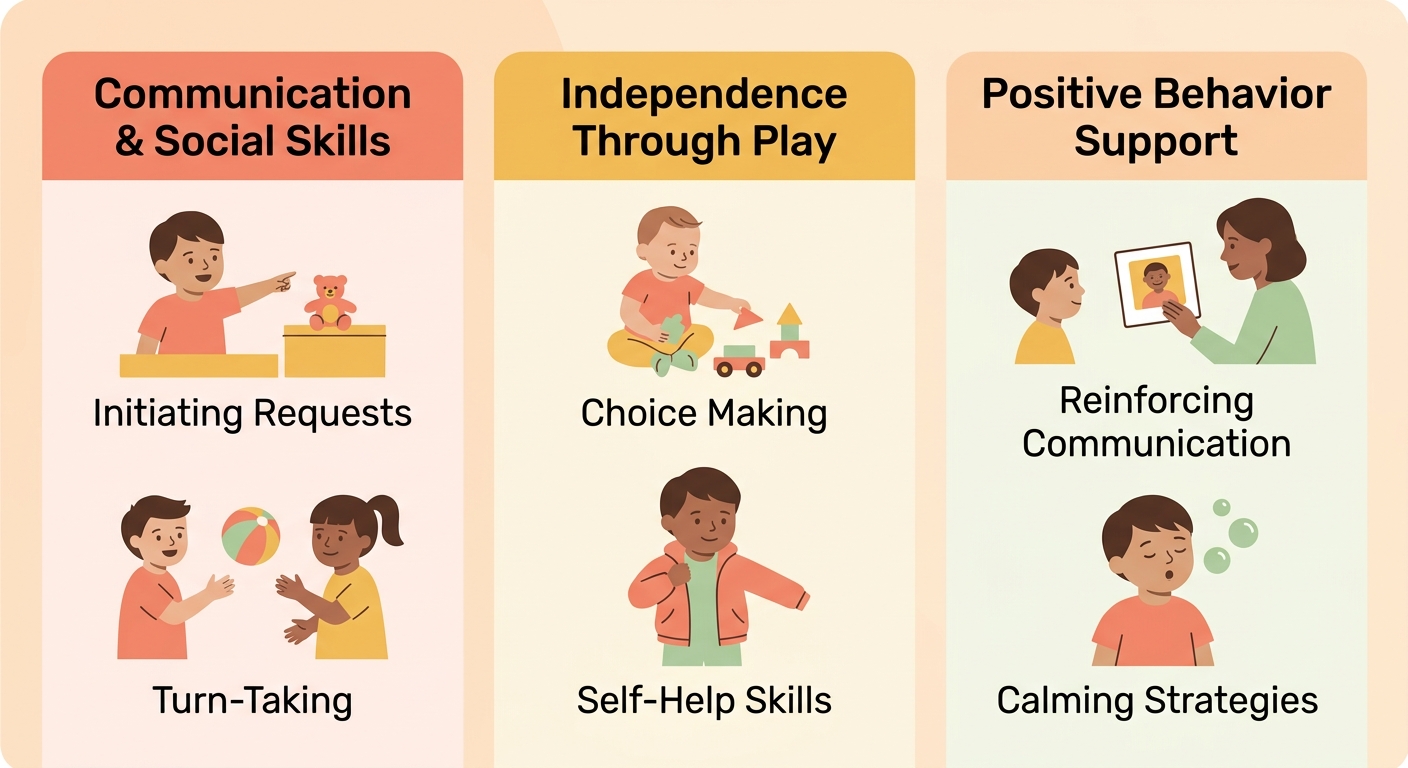
ABA therapy benefits infographic for toddlers: communication, independence, positive behavior support
Let’s take a closer look at how each of these benefits unfolds through our naturalistic, play-based methods.
Improving Communication and Social Skills
Communication and social connection are often top priorities for parents. Our therapists use natural environment teaching to help toddlers initiate requests (manding), imitate sounds (echoics), and engage in turn-taking with peers. Visual supports and peer modeling further boost social reciprocity, making interactions feel safe and rewarding. By meeting your toddler at their current ability, we create small, achievable steps that build momentum and self-esteem. Even small victories — like pointing to a favorite toy or making eye contact — are celebrated as major steps forward.
Because we embed practice into everyday play, children don’t just learn new skills — they learn to use them naturally with family and friends. Over time, this reduces frustration and helps toddlers build the confidence to explore more complex social situations. Parents often notice that as communication improves, daily routines become more peaceful and connected.
Promoting Independence Through Naturalistic Play
Naturalistic play is at the core of fostering independence. In child-led sessions, your toddler chooses an activity — like stacking blocks or dressing a doll — and our therapist weaves learning into that play. This approach encourages decision-making and gives your child a sense of control. As they select toys or decide what to do next, they’re building self-help skills like putting on a jacket, cleaning up, or getting dressed — all through fun, everyday moments. By embedding motor skills and communication into preferred activities, we help toddlers practice independence without pressure. These small successes during play build the confidence to try new tasks at home and in the community, laying a foundation for lifelong self-reliance. This natural progression makes therapy feel less like work and more like a joyful extension of your child’s day.
Reducing Challenging Behaviors with Positive Reinforcement
Challenging behaviors like tantrums or resistance often stem from frustration, sensory overload, or difficulty with transitions. Our Board Certified Behavior Analysts conduct a functional behavior assessment (FBA) to identify triggers and patterns. Once we understand the “why,” we use differential reinforcement to replace unwanted behaviors with positive communication — such as using a picture card or simple words to request a break or a favorite toy. This positive reinforcement strategy reduces stress for both the toddler and the entire family.
Parent training is woven into every session, ensuring you have strategies to reinforce progress at home. This partnership strengthens your bond and creates consistency across environments. For ABA therapy toddlers, this family-centered approach often leads to faster, more lasting gains. These benefits show why early ABA intervention can be truly transformative. Next, we’ll walk you through the simple steps to begin your child’s journey with us.
How ABA Therapy Works for Toddlers: From Assessment to Progress
When considering ABA therapy for toddlers, knowing what to expect can make all the difference. We create a warm and supportive space where every need is heard and every step is taken with care — because your journey matters. Our team provides ABA therapy in Raleigh across multiple states, tailoring sessions to your child’s strengths. Early intervention ABA strategies build foundational skills through naturalistic, child-led therapy.
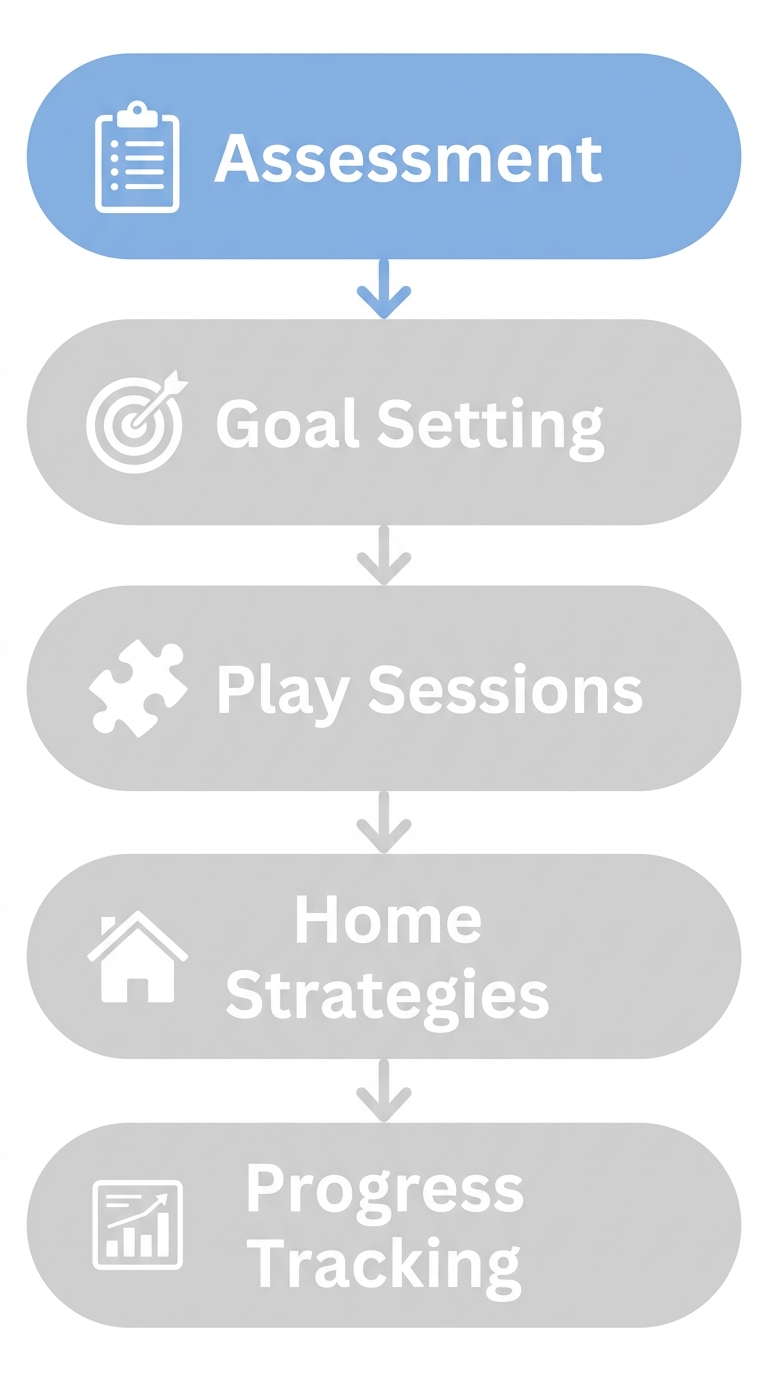
ABA therapy journey for toddlers from assessment to progress tracking.
Comprehensive Assessment and Individualized Goals
We start with a comprehensive assessment, beginning with a parent interview to understand your child’s history, strengths, and needs. After verifying insurance, our clinicians observe your toddler in natural play and routines. This reveals their current communication, social, and adaptive skills. Collaboratively, we set individualized goals that target aba therapy developmental milestones like first words, eye contact, or following simple instructions. For example, if your child isn’t yet requesting snacks, we might teach the sign for “more.” Goals are specific, measurable, and built around your family’s priorities. Your insights are crucial; you know your child best. We track progress through ongoing data collection, adjusting goals as your child grows. This tailored approach ensures therapy stays motivating. The assessment process is warm and thorough, so you feel informed every step of the way. We’re trusted by many insurance companies, making services accessible.
Naturalistic, Child-Led Teaching Sessions
ABA therapy sessions feel like play, not work. Our therapists follow your toddler’s lead, embedding learning into activities they love. This naturalistic approach means teaching happens during bubbles, building blocks, or snack time—not through rigid drills. Instead of a one-size-fits-all drill, each session is crafted to match your child’s interests and developmental level. For example, when your child reaches for bubbles, the therapist might model a request like “bubble,” then blow bubbles as soon as the child tries to communicate, reinforcing the skill. Throughout the session, our therapists track each learning opportunity, using data to fine-tune goals in real time. We use positive reinforcement to strengthen skills, filling sessions with warmth and encouragement. Because your toddler is having fun, they learn naturally. By weaving therapy into everyday moments, we help your child master turn-taking, requesting, and following routines in a joyful way. This child-led therapy builds a strong foundation for communication and social connection.
Implementing ABA Strategies at Home
Bringing ABA techniques into your daily life is one of the most powerful ways to accelerate your toddler’s progress. Consistency between therapy and home helps your child generalize new skills. Here are a few simple, but effective strategies you can start using today:
- Positive reinforcement: Celebrate even the smallest successes—like a smile, a word, or following a direction—with immediate praise, a favorite snack, or a high-five. This increases the likelihood your child will repeat the behavior.
- Visual schedules: Create a simple picture chart showing the day’s routine (e.g., snack, play, bath). Visual schedules reduce uncertainty and help your toddler anticipate transitions.
- Prompting hierarchies: When teaching a new skill, begin with full physical guidance (hand-over-hand) and then gradually fade your support until your child can perform the action independently.
We’ll share progress data with you regularly, so you can see exactly how your child is developing and where to focus at home. Our team provides ongoing parent training so you feel confident using these strategies. We’ll work with you to celebrate milestones and adjust approaches as your toddler grows.
Best Practices for ABA Therapy with Toddlers
Now let’s explore how you can put these principles into practice every day. Implementing ABA therapy for toddlers is about creating a supportive environment where small, consistent efforts lead to meaningful gains. We are here to partner with you every step of the way.
Partnering with Your Child’s ABA Team
Open communication is the foundation of effective family collaboration. We recommend scheduling brief biweekly check-ins with your child’s lead therapist to review progress and adjust goals as needed. A shared communication log—whether a simple notebook or a digital app—helps you record observations from home, such as what motivators are working best. You might keep notes on which songs or activities calm your child, what distractions arise during routines, or which reinforcers (like bubbles or stickers) get the best response. Sharing these details during check-ins ensures that therapy sessions remain child-led and motivation-driven. By sharing these daily insights, you give our team valuable information that shapes your child’s therapy. These early intervention ABA strategies are most effective when families and therapists collaborate closely, blending clinical expertise with your deep understanding of your child. With a child-led approach, we prioritize your child’s interests to make each session engaging and productive.
Creating a Consistent Home Routine
ABA therapy for toddlers works best when it feels like a natural part of your day. Embedding strategies into mealtime can be simple: use a visual schedule for hand-washing and sitting at the table, then offer a preferred reward for completing both steps. At bedtime, a calm-down routine with a token board—where your child earns tokens for each step like putting on pajamas or brushing teeth—can reduce resistance and build independence. Consistency is key, so use the same praise words and small rewards your child responds to during sessions. If the therapist prompts “touch your nose,” use that identical phrase at home to avoid confusion. Our therapists will help you identify simple, natural ways to weave these techniques into your family’s daily rhythm, turning everyday moments into learning opportunities. Remember, even small tweaks—like having your child help set the table as a routine step—can build confidence and independence.
Celebrating Small Wins and Tracking Milestones
A small win is any new skill or improved behavior—like making eye contact, following a one-step instruction, or pointing to a favorite toy. Celebrate these moments meaningfully: offer five extra minutes of playtime with a treasured toy rather than generic praise alone. This positive reinforcement encourages continued effort and deepens your connection. To keep a clear record, use a simple milestone chart or a digital tracker to note each achievement. Tracking ABA therapy developmental milestones shows you how each small step builds toward broader growth. Our therapists can suggest age-appropriate milestones to watch for and help you celebrate each new accomplishment. We believe that every new skill is a first moment worth celebrating—that’s why we say Promoting First Moments and Family Smiles Everywhere. These practices are just the beginning—our team is here to support your family every step of the way.
Moving Forward with ABA Therapy for Your Toddler
When you consider the profound impact ABA therapy toddlers can receive through early intervention, it becomes clear how vital this support can be for communication, social skills, and independence. Starting early helps your child build a strong foundation for lifelong learning and meaningful connections. Our team at All About ABA is here to guide your family every step of the way.
Our program is built on early intervention ABA strategies that blend learning into your toddler’s favorite play activities and daily routines. This child-led, naturalistic approach makes ABA therapy toddlers a natural and enjoyable part of your child’s day. We track ABA therapy developmental milestones like first words, eye contact, and turn-taking, celebrating each step forward. Your family will receive ongoing guidance from our clinical team, ensuring you feel supported at home and beyond.
With services available in Arizona, Georgia, Indiana, New Jersey, and North Carolina, we make it easy to access personalized care near you. Ready to start your child’s journey? Reach out to our team today to schedule an intake assessment and see how we can support your toddler’s growth.