Table of Contents
Your Guide to ABA Therapy in Raleigh, North Carolina
Starting the journey to find the right support for your child can feel overwhelming, but you don't have to navigate it alone. If you're searching for ABA Therapy In Raleigh Nc, you've come to the right place.
Applied Behavior Analysis (ABA) is an evidence-based therapy grounded in decades of scientific research. According to the Behavior Analyst Certification Board (BACB), ABA is a proven approach that uses positive reinforcement to teach new skills and reduce challenging behaviors. If you're asking what is aba therapy, you're not alone--it's a compassionate, personalized method that helps children with autism achieve meaningful progress.
We bring professional ABA services directly to families in Raleigh, working with you in the comfort of your home or at our local partner locations. Our team designs individualized programs that fit your family's routine, including in-home ABA therapy Raleigh families can count on. As a trusted provider, we are proud to collaborate with organizations like the Autism Society North Carolina to ensure you have access to the best resources. We offer dedicated ABA Therapy Raleigh services that focus on your child's unique strengths and needs.
At All About ABA, we're all about you, your family, and your child. Read on to learn how applied behavior analysis in Raleigh can make a meaningful difference for your child and your whole family.
Understanding ABA Therapy and Its Benefits for Raleigh Families
Applied Behavior Analysis is a data-driven, evidence-based therapy that helps children with autism develop essential skills and regulate behavior. Backed by endorsements from the US Surgeon General and the American Psychological Association, ABA is one of the most widely recognized and researched approaches for supporting children on the autism spectrum. Families in the Triangle area can find comprehensive ABA therapy programs that focus on each child's unique strengths and goals.
What Is ABA Therapy?
ABA therapy works by breaking down complex skills into small, manageable steps and using positive reinforcement to help each child reach their full potential. It is not a one-size-fits-all method, but rather a systematic approach grounded in decades of clinical research. Through our aba therapy programs, we help children build crucial skills while addressing behaviors that may interfere with learning and social interaction.
Behavior analysts carefully collect data during every session to measure progress and adjust techniques in real time. This continuous cycle of observation, analysis, and refinement ensures that each child receives true autism therapy in Raleigh that evolves as they grow. Families often appreciate this transparent, measurable approach because it demystifies the therapeutic process and provides clear evidence of development.
Core Skills Developed Through ABA Therapy
Through consistent, play-based engagement, children develop communication abilities that range from making requests to initiating and sustaining conversations. Our team structures sessions around meaningful interactions that help children express their wants and needs more effectively, which often reduces frustration and problem behaviors.
Social engagement is another critical area of focus. Behavioral therapy Raleigh providers emphasize skills like turn-taking, sharing, and reading social cues so children can build stronger peer relationships. Equally important are daily living skills such as dressing, feeding, and toileting. ABA services Raleigh families rely on also incorporate play skills that encourage imagination and cooperation, as well as community integration training that helps children navigate public spaces safely and confidently. Over time, these foundational abilities support greater independence and a higher quality of life.
Why Raleigh Families Choose ABA Therapy
Raleigh has seen a steady increase in qualified providers offering in-home ABA therapy Raleigh parents can trust. This local growth means families no longer need to travel long distances to access high-quality care. Personalized programs tailored to meet individual needs are at the heart of this expansion, with clinics and in-home teams designing interventions that reflect a child's interests, cultural values, and daily routines. A local autism organization, the Autism Society of North Carolina, has noted the growing availability of early-intervention resources that make getting started easier for Wake County families.
We collaborate closely with caregivers because Your Family and Your Child are at the center of every decision we make. According to ABA International, the leading professional association for behavior analysts, effective treatment always involves training parents and guardians so progress continues beyond formal sessions. Support. Growth. Real Change. is more than a motto; it is the commitment that fuels our clinical team of ABA specialists.
When searching for ABA therapy in Raleigh NC, parents often prioritize providers who offer flexible scheduling and multiple service settings. Whether a family prefers center-based early intervention or in-home support that fits a busy schedule, access to comprehensive options makes all the difference. Start Your Child's Journey by exploring how an individualized plan can open up new possibilities for learning, connection, and confidence.
In-Home vs. Center-Based ABA Therapy in Raleigh: A Detailed Comparison
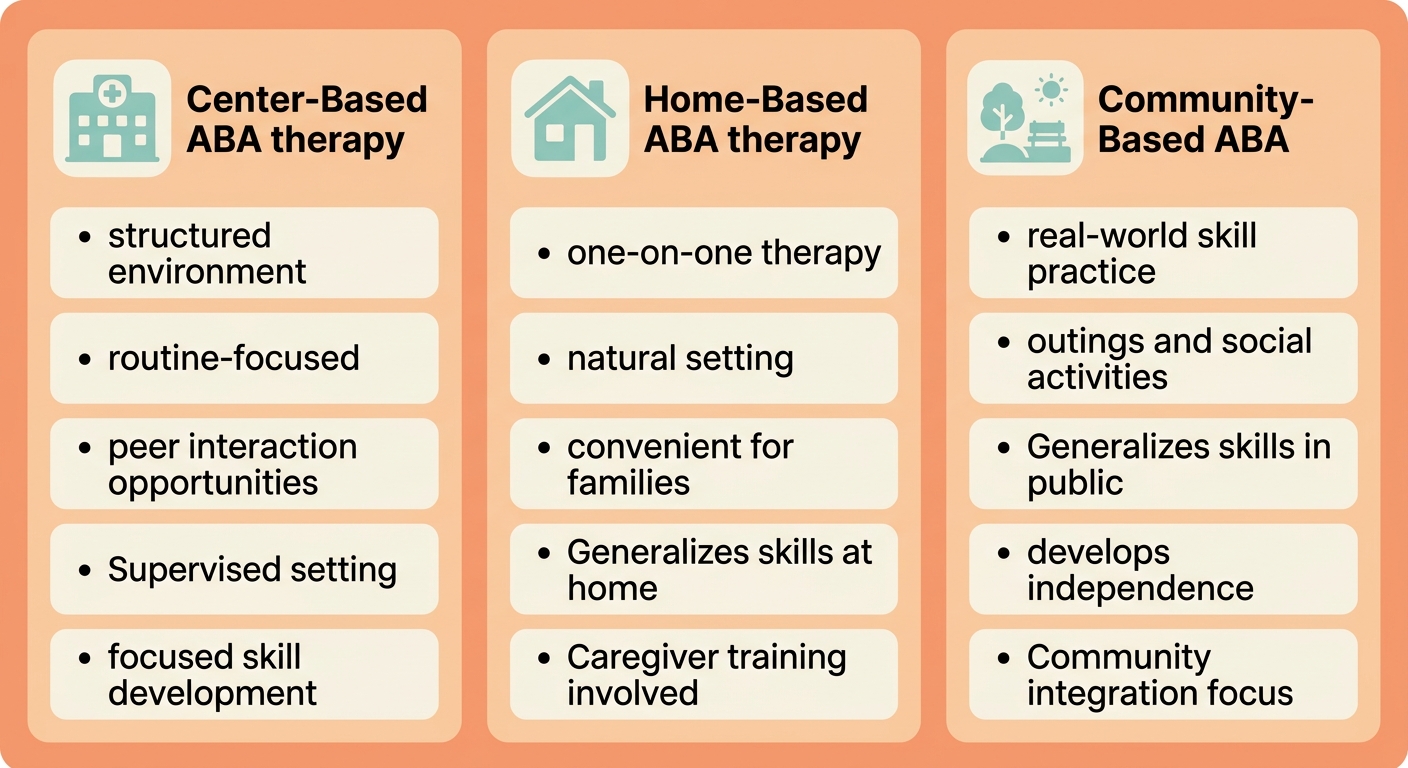
Beyond understanding what ABA therapy is, Raleigh families often weigh the two primary settings: in-home and center-based. Choosing the right environment for your child's ABA Therapy In Raleigh Nc is a significant step, as each offers distinct advantages. To learn more about all about aba therapy and how we tailor each setting, this guide provides a detailed comparison to help you make an informed decision.
What Is In-Home ABA Therapy?
In-home ABA therapy delivers services directly within your child's familiar home environment. This approach allows our team to use Natural Environment Teaching (NET) by integrating learning seamlessly into daily routines like mealtime, play, and bedtime. High parent involvement is a cornerstone of this model, enabling you to observe sessions and learn effective strategies in real time. Skills taught in this natural context are immediately generalized, as your child practices them where they naturally occur, fostering meaningful progress.
This setting can be ideal for younger children or those who experience high sensitivity to changes in their routine. The comfort of a known space often reduces anxiety and helps the child stay engaged. By working within the family's actual day-to-day life, we can address specific behavioral goals that directly improve daily living skills. The collaboration between our behavior technicians and your family is immediate and continuous, which is a core component of effective care.
What Is Center-Based ABA Therapy?
In contrast, center-based ABA therapy occurs in a structured clinic environment, much like our location in the area. This space is purpose-built with specialized tools, materials, and a consistent schedule designed to maximize learning. One of the most significant benefits is the opportunity for structured peer interaction in a controlled setting. Children can practice social skills and participate in group activities alongside peers, which is a critical step toward school readiness. These programs are supervised by Board Certified Behavior Analysts (BCBAs) to ensure the highest clinical standards.
The predictable routine of a clinic setting provides a clear, distraction-reduced framework that some children thrive in. Our Registered Behavior Technicians implement individualized plans that follow the specific goals set by the clinical supervisor. The structured nature of the center also allows for low caseloads, meaning your child gets focused attention, and regular training sessions keep you closely connected to our clinical strategy. The dedicated space offers consistency that can be very reassuring for both the child and the family.
Key Differences Between In-Home and Center-Based ABA
Deciding between these two effective options involves looking at how their unique features align with your family's lifestyle and your child's personality. While both are often covered by insurance under similar benefit structures, their strengths apply to different developmental areas. The following table clearly organizes these contrasts to help you understand the practical implications of each choice.
| Feature | In-Home ABA Therapy | Center-Based ABA Therapy |
|---|---|---|
| Environment | Natural home setting; child's familiar space | Structured clinical setting with specialized tools |
| Social Opportunities | Primarily one-on-one with therapist; limited peer interaction | Structured peer interactions and group activities |
| Parent Involvement | High; parents can observe and learn strategies directly | Moderate; regular parent training sessions and updates |
| Skill Generalization | Skills practiced in daily routines naturally | Requires intentional practice at home after learning |
| Cost | Often covered by insurance; similar to center-based | Often covered by insurance; similar to in-home |
| Best For | Younger children, children with high sensitivity to change, families wanting direct modeling | School-age children who need peer practice, families seeking structured schedule |
This table highlights how each setting may better support different aspects of your child's development. The in-home model excels at immediate, contextual skill use, while the center-based environment uniquely fosters social growth through consistent peer engagement. Understanding these fundamental differences is the first step toward visualizing the right path forward for your family's journey.
Which Option Is Right for Your Child?
Selecting between in-home and center-based care requires a thoughtful look at your child's current needs and your family's circumstances. Our clinical team offers personalized ABA Therapy For Autism Raleigh families trust to help determine the best setting through a comprehensive, BCBA-led assessment. The decision is never one-size-fits-all; it depends on a combination of unique factors.
First, consider your child's age and sensory sensitivities. Younger children, or those who find new environments overwhelming, often benefit greatly from the familiar, calm atmosphere of in-home therapy. On the other hand, a child who craves social connection and is approaching school age may find the structured peer groups in a center more stimulating and beneficial. Your daily schedule is another critical factor. A center-based program offers a consistent, drop-off schedule that can be a great fit for working parents, while in-home therapy requires an adult to be present and potentially participate. Finally, always verify your insurance coverage, as benefits must align with your chosen setting. An individualized assessment is necessary to evaluate your child's strengths and areas for growth to recommend the most appropriate setting. Once you consider these factors, the next step is to verify your insurance coverage for your chosen setting. Results may vary based on individual child's needs and circumstances.
How to Get Started with ABA Therapy in Raleigh: A Step-by-Step Process
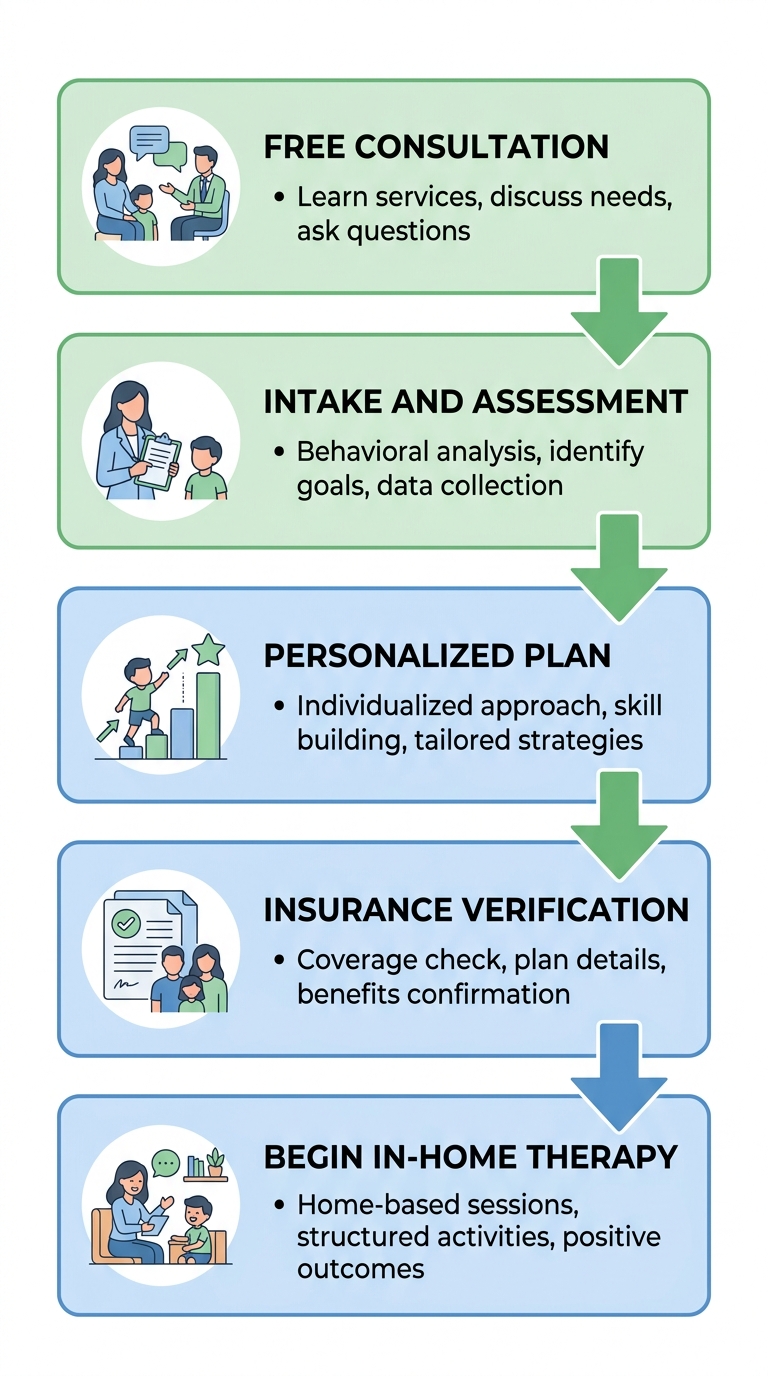
Once you understand the benefits of ABA, the next step is taking action. Beginning ABA therapy in Raleigh NC for your child involves a clear, manageable process designed to ensure they receive the most appropriate and effective support. As an evidence-based practice, Applied Behavior Analysis relies on comprehensive assessments and personalized planning to foster meaningful, real-world progress. This guide walks you through each stage, from securing a formal diagnosis to seeing the first signs of growth, so your family can move forward with confidence knowing what to expect at every turn.
Step 1: Obtain a Formal Autism Diagnosis in Raleigh
The foundational step for accessing ABA therapy in Raleigh NC is a formal autism assessment and diagnosis. A diagnosis from a licensed psychologist, developmental pediatrician, or neuropsychologist is typically required for insurance coverage, including NC Medicaid. Families can schedule an evaluation at local clinics, such as those run by developmental pediatricians at WakeMed Children's or private child psychology practices specializing in autism assessment diagnosis in Raleigh. The Autism Society North Carolina also serves as a trusted referral source, guiding you toward qualified providers in Wake County. These evaluations generally consist of caregiver interviews, direct observation, and standardized testing. Once you have the diagnostic report in hand, you are ready to explore how Raleigh ABA services can best support Your Child.
Step 2: Research ABA Providers and Verify Insurance Coverage
With the diagnosis confirmed, the next stage is to find a provider that aligns with your family's needs. As you research in-home ABA therapy Raleigh options and local clinic-based programs, verify that each provider employs Board Certified Behavior Analysts. The Behavior Analyst Certification Board certifies BCBAs, and you can confirm a practitioner's credentials via the BACB registry. Simultaneously, you should verify insurance coverage. NC Medicaid covers ABA under the EPSDT benefit when prescribed by a physician, and many private insurers in North Carolina also offer benefits for autism treatment. Because medical necessity criteria apply, we recommend calling your plan directly to understand your specific coverage details. Once you have confirmed coverage, the next step is to contact aba therapy provider to initiate the intake process.
Step 3: Schedule an Initial Assessment and Customize a Treatment Plan
After you contact a provider, they will schedule an initial assessment conducted by a BCBA. This visit typically lasts 2-4 hours and takes place in-person at your home, a clinic, or another community setting, depending on what works best for Your Family. During the assessment, the BCBA will conduct a caregiver interview, observe your child in structured and unstructured activities, and administer preference assessments and skill-based tools like the VB-MAPP or AFLS. The information gathered forms the basis of a completely individualized treatment plan. Goals for areas such as communication and daily living skills are collaboratively written with you. These goals are then re-evaluated every six months to ensure the program evolves alongside your child's development, following a standard practice that emphasizes continuous quality improvement.
Understanding Typical Timelines for Progress
Entering therapy with realistic expectations is crucial. Measurable progress often begins within 3-6 months of consistent ABA, but this is highly individualized. Results may vary based on individual child's needs and circumstances, influenced by factors such as therapy intensity and family involvement. Rather than focusing on a fixed timeline, it is more constructive to celebrate small, incremental victories, knowing that each new skill builds a foundation for lasting growth. With a clear plan in hand, you are ready to start your child's journey with a trusted partner.
Advanced Considerations for ABA Therapy in Raleigh: Insurance, BCBA Selection, and Long-Term Progress
When considering advanced considerations for ABA therapy in Raleigh NC, families often find that the practical questions about coverage, clinician qualifications, and daily involvement are just as critical as the therapeutic approach itself. We understand that moving forward requires clear, actionable answers to these essential logistics.
Does NC Medicaid Cover ABA Therapy in Raleigh?
Yes, ABA therapy is a covered benefit under North Carolina's Medicaid plan. Many families seeking ABA therapy in Raleigh NC turn to NC Medicaid for support, as it is a primary insurer in the region. To access this benefit, a child must have a formal autism spectrum disorder diagnosis and a written prescription for ABA services. However, coverage details can vary by the specific NC Medicaid Managed Care plan, such as AmeriHealth Caritas or WellCare. We strongly recommend families call the member services number on their insurance card directly. You should verify the network status of any prospective provider, understand specific authorization requirements, and clarify any copay or deductible obligations before beginning services. Medical necessity criteria apply to insurance coverage. Individual assessment required before treatment planning.
How to Select a Qualified BCBA in Raleigh
Choosing a Board-Certified Behavior Analyst is a personal decision that should be guided by verification and a thorough interview. We recommend taking the following steps:
- Verify the BCBA's certification directly on the official Behavior Analyst Certification Board (BACB) website, using their Verify a Certificant tool. This is the only definitive source for confirming an active, good-standing credential.
- Ask about the clinician's direct experience with Your Child's primary challenges, whether that involves aggression, communication delays, or other specific behaviors. Inquire about their familiarity with Raleigh's local school system for smoother transitions.
- Expect a clear, written treatment plan with measurable goals and a data collection schedule. A quality provider should offer a sample session observation before you commit to a long-term contract.
Understanding Parent Involvement and Session Expectations
Parent involvement in ABA therapy is an active partnership, not passive observation. Personalized programs tailored to meet individual needs should include a formal parent education curriculum with live coaching and training to support progress outside of sessions. Families should also expect a written communication protocol from their provider, detailing how progress notes and monthly reports are shared, and identifying the main clinical point of contact. Meaningful behavioral change is a journey that relies on consistent data-driven plan adjustments, typically re-evaluated every six months.
Common Questions About ABA Therapy in Raleigh, NC
What is ABA therapy? When families search for ABA Therapy In Raleigh NC they find our approach uses positive reinforcement to build communication, daily living, and social skills in a way that's unique to your child. We focus on teaching meaningful behaviors through encouragement rather than pressure.
What does a typical session look like? Our one-on-one sessions are led by a behavior technician and supervised by a Board Certified Behavior Analyst (BCBA) who designs your child's personalized plan. We offer flexible options including clinic-based care and in-home ABA therapy Raleigh families can access, all shaped around your schedule and goals.
How do we start services? After you reach out, our BCBA conducts a thorough initial assessment -- separate from any autism assessment diagnosis Raleigh process -- to understand your child's strengths and your family's priorities. Together, we create a tailored treatment plan that is re-evaluated every six months.
Does insurance cover ABA in North Carolina? We are in-network with many major North Carolina insurers and work directly with you to verify benefits. Coverage depends on your plan's medical necessity criteria, and we guide you through that process so you can focus on your child's progress.
What age groups do you serve? Our programs support children from early childhood through adolescence, adapting strategies as your child grows. Results may vary based on individual child's needs and circumstances, but every plan is built around positive reinforcement to help each child reach their full potential.
Start Your Child's Journey with ABA Therapy in Raleigh
If you are considering ABA therapy in Raleigh NC, All About ABA provides customized, child-led applied behavior analysis in Raleigh designed to meet your family's unique needs. Our Raleigh-area ABA programs include convenient in-home ABA therapy Raleigh, delivered by a compassionate clinical team of ABA specialists who collaborate closely with your family. To begin your child's journey, contact our team today to schedule an initial consultation and learn how we can support your child's growth with personalized, family-focused care--because We're All About You, Your Family, and Your Child.
This article was researched and written with the assistance of AI tools.