Table of Contents
Now that you understand how ABA works, recognizing the signs child needs aba therapy can feel overwhelming, but you are not alone. Every child develops at their own pace, yet certain indicators may suggest extra support could help.
You may notice your child has delayed speech or lost words they once used, avoids eye contact, shows little interest in playing with peers, engages in repetitive movements like hand-flapping, struggles with changes in routine, or reacts strongly to sensory input. While these signs alone don’t mean a diagnosis, noticing several signs child needs aba therapy could indicate that child-led support might help.
If you see these signs persistently, we encourage you to consult a Board Certified Behavior Analyst (BCBA) certified by the Behavior Analyst Certification Board. At All About ABA, we create a warm and supportive space where every need is heard, helping Your Family, and Your Child thrive through personalized, child-led therapy. Promoting First Moments and Family Smiles Everywhere, we are All About You.
Behavioral Signs Your Child Might Benefit from ABA Therapy
As parents, we often notice subtle shifts in our child’s behavior that make us wonder if extra support could help. If you're wondering about signs child needs aba therapy, recognizing common behavioral indicators can be a meaningful first step. At All About ABA, we believe early identification leads to personalized, child-led support.
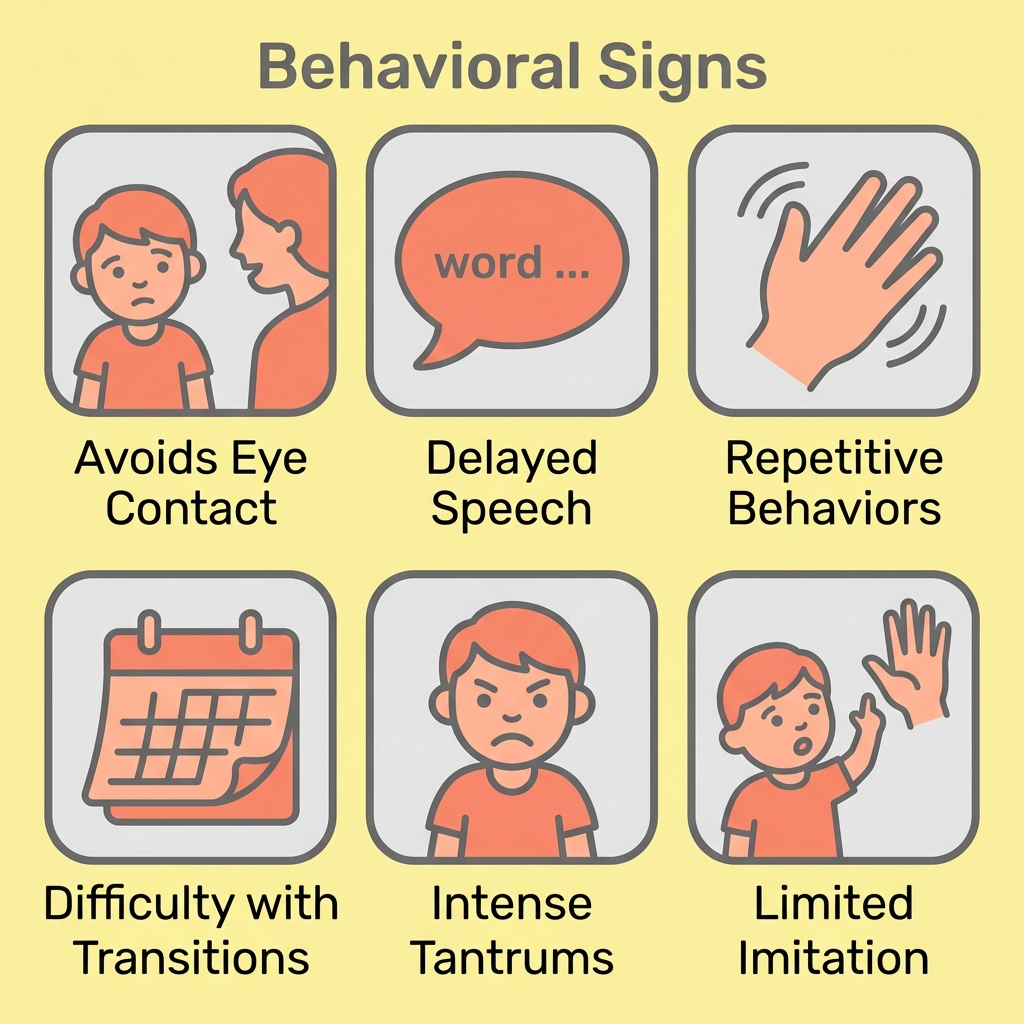
Below are some common behavioral signs we see in children who later flourish with ABA therapy.
- Difficulty with Social Interactions: Your child may avoid eye contact or not respond to their name, which can make connecting with others challenging. ABA therapy builds social skills through naturalistic, play-based interactions that encourage meaningful relationships.
- Communication Delays or Repetitive Language: If your child has delayed speech or uses repetitive phrases, this may indicate that ABA therapy could help expand functional communication. We use positive reinforcement to teach new ways to express needs and share ideas.
- Repetitive Behaviors: Hand-flapping, rocking, or lining up toys in rigid patterns are common red flags. ABA can help your child develop alternative ways to regulate sensory and emotional needs through structured, child-led activities.
- Difficulty with Transitions and Changes in Routine: Becoming extremely upset when routines shift can create daily stress. ABA therapy teaches flexible thinking and gradual coping skills, making transitions smoother for your entire family.
- Intense or Prolonged Tantrums: Tantrums that seem more intense or last much longer than typical may point to an underlying need for support. Our approach identifies triggers and teaches more effective ways to communicate frustration.
- Limited Interest in Play or Imitation: If your child rarely imitates others or engages in pretend play, this behavioral sign suggests that ABA therapy could help build social learning. We incorporate fun, child-led activities to nurture these essential skills.
If these signs sound familiar, a professional assessment can determine if ABA therapy is right for your child. We create a warm, supportive space and partner with families across Georgia and beyond. If you’re in the Atlanta area and recognize these signs, our ABA therapy for kids in Atlanta can provide the personalized support your child needs. We’re here—Promoting First Moments and Family Smiles Everywhere. Start Your Child’s Journey with us today.
When Communication Challenges Warrant an ABA Evaluation
As a parent, noticing your child struggle to communicate can feel overwhelming. While every child develops at their own rhythm, certain signs child needs aba therapy may indicate that a professional evaluation could offer clarity and a path forward.
Communication milestones offer helpful guideposts:
- No babbling by 12 months: Babbling is a precursor to speech. When it’s absent, an ABA evaluation can assess whether underlying communication skills are developing and identify early supports.
- No single words by 16 months: By this age, many children use simple words like “mama” or “dada.” If your child isn’t doing so, an evaluation can explore how they learn and what individualized strategies might help.
- No two-word phrases by 24 months: Combining words is a leap in expressive language. Our team looks at how your child interacts within a naturalistic, play-based setting to understand what’s holding them back.
- Loss of previously acquired language: When a child stops using words they once said, it’s a red flag. We take this seriously and use an evaluation to uncover why it’s happening and to build a plan that supports re-engagement.
We create a warm and supportive space where every need is heard and every step is taken with care—because your journey matters. These communication challenges that suggest an ABA evaluation are not diagnoses; they’re invitations to get curious. Our ABA evaluations are designed around your child, using child-led techniques to ensure the plan we design is truly personalized.
Our team provides these evaluations in multiple locations, including Raleigh and Athens. If you’re in the Raleigh area, ABA therapy in Raleigh is a convenient way to access our services. We help families across our service regions take that first step with confidence.
Early identification can open doors to meaningful progress. If you recognize any of these indicators, we invite you to contact us—let’s start your child’s journey together. Our caring team is ready to answer your questions and walk with you through the evaluation process. We welcome you to reach out and take the first step.
The Role of an Autism Diagnosis in Accessing ABA Therapy
Recognizing the signs a child needs ABA therapy is often the first step on a family’s journey toward support. Once those early indicators appear, obtaining a formal autism diagnosis becomes the key that unlocks access to specialized Applied Behavior Analysis services. This diagnosis not only confirms eligibility but also helps clinical teams design a truly personalized, child-led approach.
An official autism spectrum disorder diagnosis is typically required for insurance coverage of ABA therapy. Most insurance providers and therapy centers rely on this formal documentation to authorize treatment hours and reimbursement. We work closely with families to verify benefits and navigate the intake process, ensuring the diagnosis is used as a starting point for care rather than a barrier. According to the biomedical literature maintained by the National Institutes of Health, early diagnosis paired with ABA intervention leads to meaningful developmental progress. The PubMed biomedical literature database contains numerous studies highlighting how timely, evidence-based therapy supports gains in communication, social skills, and daily living.
A diagnosis guides our clinical team in crafting individualized treatment plans that honor each child’s unique strengths and challenges. Rather than treating a label, we focus on the whole child — building sessions around their interests while targeting specific goals like emotional regulation, community engagement, and play-based skill building. Our Augusta therapy center explains that families begin with an initial evaluation and benefit verification, followed by a comprehensive assessment that shapes every aspect of the program. Indicators ABA therapy could help often include difficulty with social interaction or communication, and a formal diagnosis allows us to address these areas with precision and compassion.
Once a diagnosis is in hand, families can take these steps to start services:
- Complete our referral and intake form online or by phone.
- Work with our admissions team for insurance verification and financial guidance.
- Schedule the initial clinical evaluation to set personalized therapy goals.
We’re All About You, Your Family, and Your Child, and we create a warm and supportive space where every need is heard and every step is taken with care — because your journey matters. A diagnosis is not a limitation; it is a pathway toward tailored, results-driven support that promotes first moments and family smiles everywhere. Ready to take the next step? Start Your Child’s Journey with us today. In the next section, we’ll walk you through what happens after your child’s diagnosis.
Early Developmental Red Flags That Indicate a Need for Behavioral Support
Every parent wants to see their child thrive, and paying close attention to early developmental milestones is an important part of that journey. Recognizing the signs child needs ABA therapy early can make a world of difference in getting your little one the support they need when it matters most.
But how do you know if your child could benefit from additional support? Certain early indicators can signal that a closer look is warranted. It is important to remember that these signs do not constitute a medical diagnosis, but they do suggest a need for further evaluation. According to All About ABA’s toddler ABA therapy guide, many of these red flags can emerge in children as young as one to three years old.
Communication delays are one of the most common early indicators. If your child is not babbling by 12 months or has not spoken any single words by 16 months, it may be worth exploring professional guidance. Our child-led therapy approach helps children build communication skills through play, turning everyday moments into opportunities for language growth.
Loss of previously acquired skills is another important signal. Some children may stop using words or gestures they once demonstrated with ease. This regression can be confusing and concerning for families, which is why we create a warm and supportive space to understand what your child is experiencing and gently reinforce those earlier gains.
Social difficulties such as consistent avoidance of eye contact, limited response to their name, or a marked disinterest in interacting with caregivers and peers are also worth noting. Our naturalistic, play-based strategies are designed to foster social engagement by following your child’s lead and making connection feel natural and rewarding.
Intense tantrums that go far beyond typical developmental frustrations and are difficult to soothe can indicate challenges with emotional regulation. Through positive reinforcement and results-driven techniques, we help children learn to express their needs and manage big feelings in a more adaptive way.
If any of these early indicators sound familiar, a professional evaluation can provide clarity and direction. For families living in the Spring area, our ABA therapy for children in Spring is designed to provide the compassionate guidance and individualized support your family deserves. Reach out to All About ABA today to schedule a comprehensive assessment and take the first step toward meaningful progress.
Distinguishing Typical Tantrums from Behaviors Needing Professional ABA Intervention
As a parent, it’s natural to wonder when challenging behaviors cross the line from typical development. Understanding the signs child needs aba therapy can help your family recognize when professional support might be beneficial. Certain patterns can help you distinguish everyday frustration from signs that a deeper need may be present.
The differences come down to duration, frequency, and intensity. Below we highlight key contrasts between a regular developmental tantrum and behaviors that may warrant further evaluation.
| Typical Tantrum | May Need Professional Support |
|---|---|
| Occurs 1–3 times per week; lasts 2–15 minutes | Lasts more than 25 minutes; occurs 5+ times per day |
| Resolves with distraction, comfort, or redirection | Involves aggression (hitting, biting) or self-injury (head banging) |
| Does not include property destruction | Destroys property; cannot be calmed with parental intervention |
| Age-appropriate (typically under age 4) | Age-inappropriate; continues beyond age 4 |
These distinctions, illustrated in the infographic below, can help you decide when to take a closer look at your child’s behavior. Early recognition of red-flag behaviors allows you to seek support before patterns become deeply ingrained. The visual below captures the core differences, making it easier to compare what is typical versus what might need attention.
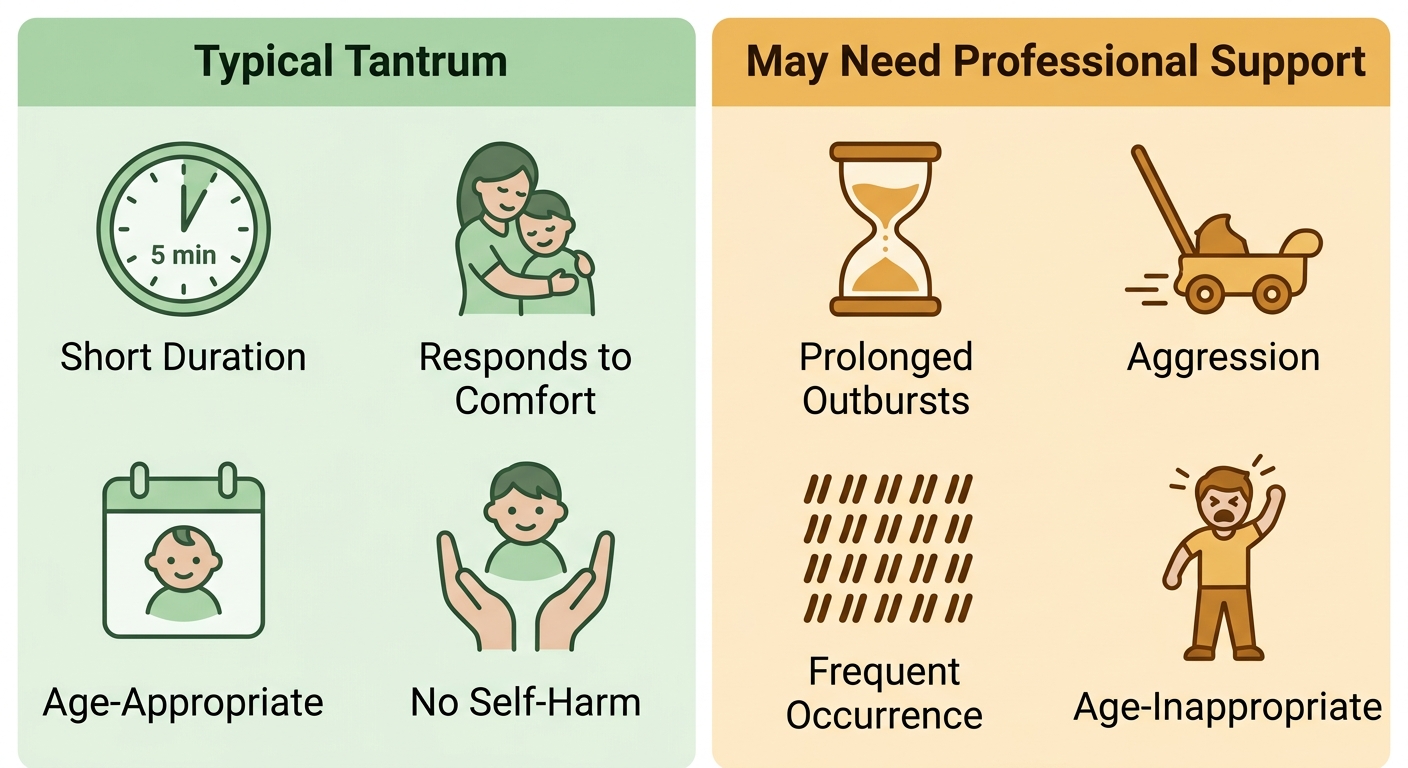
If your child’s tantrums involve aggression, self-harm, or seem unmanageable within your usual coping strategies, it may be wise to consult a professional. Recognizing the signs child needs aba therapy isn’t about labeling your child; it’s about opening a door to support that builds communication, emotional regulation, and daily living skills. ABA therapy, grounded in research endorsed by the Behavior Analysis International Association, is a child-led, naturalistic approach that focuses on meaningful progress rather than rigid correction. According to the Behavior Analyst Certification Board (BACB), qualified behavior analysts use evidence-based strategies to understand why behaviors occur and to teach positive alternatives.
We understand this step can feel overwhelming, but you are not alone. If you notice these signs, our compassionate team is here to help. We create a warm and supportive space for your family’s journey. Contact us to learn how we can support your child’s growth.
Moving Forward with Confidence and Care
Noticing the signs child needs aba therapy can be overwhelming, but you don’t have to navigate this alone. We’re here to guide you forward with confidence and care.
At All About ABA, we provide personalized, child-led therapy tailored to your family’s unique needs. Our Board Certified Behavior Analysts (BCBAs), certified by the Behavior Analyst Certification Board, lead a passionate, results-driven clinical team that helps your child build communication, social, and daily living skills through naturalistic, play-based methods. Our child-led approach addresses the specific signs your child may benefit from ABA therapy, helping them thrive in everyday routines. We offer comprehensive family guidance so you can reinforce progress at home, and early intervention can make a meaningful difference. For more details, our Toddler ABA Therapy Guide explains the benefits of play-based early intervention. Our intake assessment identifies your child’s strengths and goals, and many insurance companies trust our services, available in Arizona, Georgia, Indiana, New Jersey, and North Carolina.
If you’re ready to take the next step, contact us today to Start Your Child’s Journey. We’re All About You, Your Family, and Your Child—here to support you every step of the way.