Best ABA Therapy for Children Spring: Trusted Local Care

Table of Contents
- Understanding ABA Therapy for Children in Spring
- What ABA Therapy Means for Children and Families
- Key Advantages of Child-Focused ABA Therapy
- The ABA Therapy Process for Your Family
- Best Practices for Families Starting ABA Therapy
- Supporting Every Child's Growth in Spring
Understanding ABA Therapy for Children in Spring
At All About ABA, we believe that meaningful progress begins with a personalized approach. Our aba therapy for children Spring program is built around the idea that learning happens best when children feel safe, supported, and engaged. Applied Behavior Analysis is a naturalistic, child-led therapy designed for aba therapy autism children, using play and everyday routines to teach essential communication, social, and daily living skills. Rather than relying on rigid drills, our therapists follow each child’s interests, turning favorite activities into powerful teaching moments that build confidence step by step.
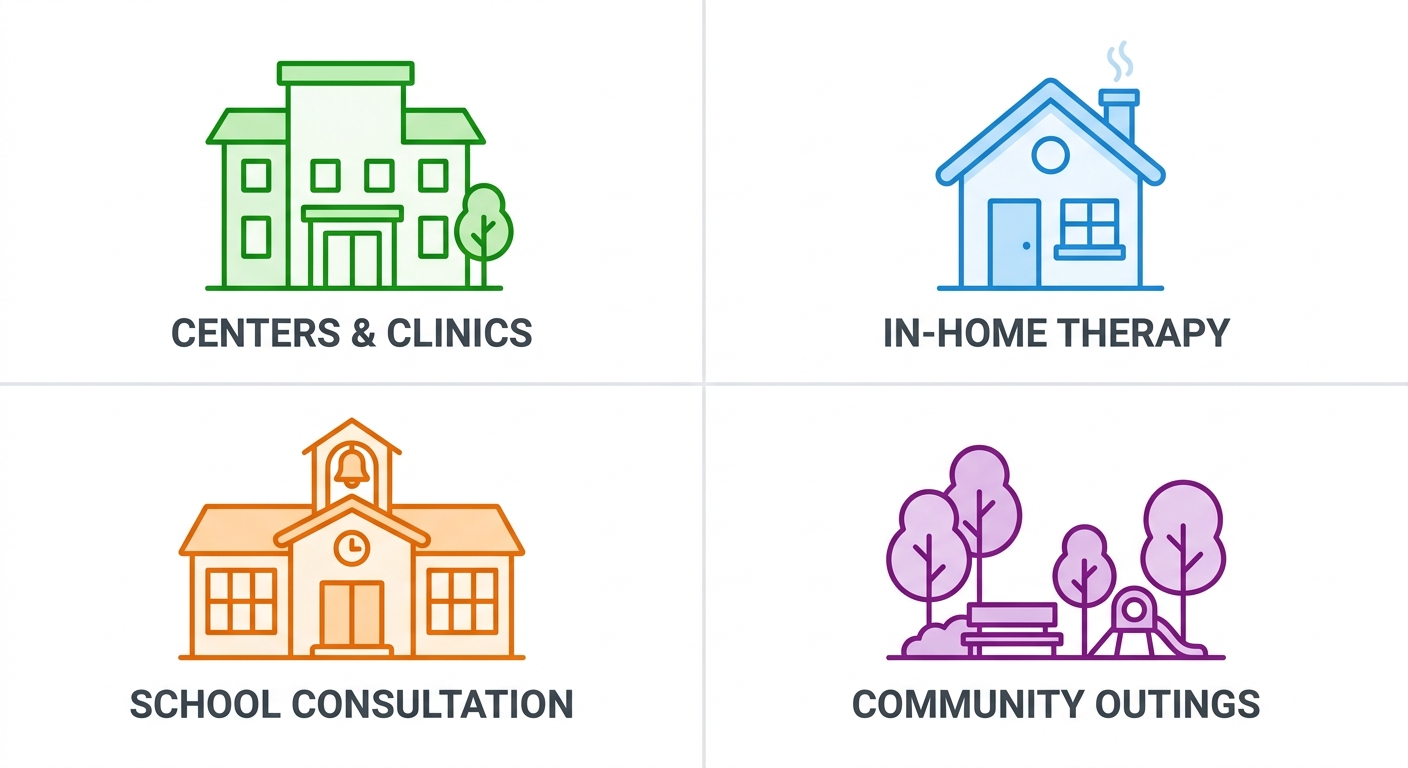
One of the greatest advantages of our in home aba therapy model is that it takes place right where your child already feels most comfortable. When therapy happens in your living room or backyard, new skills are practiced in the exact setting where they’ll be used every day. For families searching for aba therapy for children Spring, this means no stressful commutes and learning that fits naturally into your family’s schedule. We create a warm and supportive space where every need is heard and every step is taken with care — because your journey matters. Our clinical team designs every program around your child’s unique strengths, using results-driven, naturalistic, child-led therapy that makes progress feel like play.
We’re All About You, Your Family, and Your Child, and we’re ready to help. For a deeper look at how our approach works, visit our comprehensive ABA therapy resource. Start Your Child’s Journey today and let’s explore how we make this happen for your family.
What ABA Therapy Means for Children and Families
For families exploring support options, aba therapy for children represents a scientifically validated approach that uses positive reinforcement to help young people build meaningful skills — and for families — it opens a door to greater connection, communication, and confidence at home. Rooted in Applied Behavior Analysis (ABA), this method focuses on understanding how behavior works in everyday situations and using that understanding to teach skills that matter most to each child and their family. The Behavior Analyst Certification Board establishes the ethical and professional standards that guide qualified practitioners, ensuring every program is grounded in research and delivered with care.
Rather than following a one-size-fits-all script, today’s ABA programs are designed to be flexible, naturalistic, and led by the child’s interests. When families choose in home ABA therapy or center-based sessions, they are stepping into a partnership where progress is measured, celebrated, and woven into daily routines. Our team embraces a results-driven, naturalistic, child-led therapy model that respects each child’s unique personality while systematically building the skills that promote independence and joy.
What is ABA Therapy? A Child-Centered Definition
At its heart, ABA therapy is a way of understanding how children learn from their environment and using that knowledge to teach new skills in a positive, encouraging way. According to the National Center for Biotechnology Information (U.S. National Library of Medicine), research evidence supports the effectiveness of ABA-based interventions for children on the autism spectrum, particularly in areas of communication and social development. Rather than relying on rigid drills, child-centered ABA follows the child’s lead, embedding learning opportunities into play, routines, and activities the child already enjoys.
Practitioners observe what motivates each child and use those motivators to reinforce helpful behaviors such as making eye contact, using words to request a toy, or taking turns during a game. This approach builds trust and engagement because the child experiences success naturally rather than feeling pushed into uncomfortable tasks. For families in Spring and the communities we serve, this means therapy feels less like a clinical appointment and more like guided play that produces real, lasting growth.
ABA Therapy and Children with Autism
Aba therapy autism children programs adapt core behavioral principles to meet the specific learning profiles common among children on the autism spectrum. Many children with autism process sensory information, social cues, and language differently, so qualified clinicians design individualized plans that break skills into manageable steps while honoring each child’s preferred ways of interacting with the world. This might mean teaching a child to use a picture card to request a snack before expecting spoken words, or practicing greetings with a favorite stuffed animal before approaching a peer on the playground.
Naturalistic teaching strategies embed these lessons into activities the child already finds meaningful, whether that’s stacking blocks, singing songs, or exploring sensory bins. By working within the child’s natural interests, therapists reduce frustration and increase motivation, helping children build communication, social, and daily living skills at a pace that feels comfortable. Families receive guidance and support throughout the process, so strategies used during sessions carry over into bedtime routines, mealtimes, and community outings, ensuring that gains made during therapy translate to real-world success.
Core Skills Built Through ABA Therapy
ABA therapy targets a range of skills that help children participate more fully in family life, school, and community activities. Communication skills often receive early emphasis because the ability to express wants, needs, and feelings reduces frustration and opens the door to social connection. Therapists work on both verbal communication and nonverbal methods such as gestures, signs, or picture-exchange systems depending on each child’s current abilities.
Social skills and daily living skills develop alongside communication, forming a foundation for greater independence. Core skill areas typically include:
- Communication skills including requesting items, labeling objects, and engaging in simple conversation
- Social abilities such as turn-taking, sharing, and reading facial expressions
- Daily living routines like dressing, handwashing, and mealtime participation
- Academic readiness including attending to instructions, imitating actions, and completing simple tasks
These skills build on each other, and progress in one area often sparks growth in another. By partnering with families and coordinating across settings, we help children generalize what they learn so that a skill practiced during a session appears naturally during Sunday dinner at Grandma’s house or morning circle time at preschool.
Key Advantages of Child-Focused ABA Therapy
When families seek ABA therapy for children in spring and beyond, they are often looking for more than just a clinical service—they want a partnership that fits naturally into their lives. Our specialized ABA therapy for children is designed to be child-led and results-driven, providing a warm and supportive space where every need is heard and every step is taken with care. Unlike generic behavioral interventions, our approach integrates into your child's daily routines, making learning both engaging and practical. For families exploring ABA therapy for children with autism, this tailored method ensures that skills are not just learned in a clinic but are truly mastered and used at home, in the community, and with loved ones.
The Power of In-Home ABA Therapy
In home ABA therapy offers a uniquely effective way for children to learn by transforming their everyday environment into a learning laboratory. By working within the home, we create a comfortable and familiar setting where a child’s natural routines—like mealtime, play, and bedtime—become the context for therapeutic growth. This allows skills to be taught and practiced exactly where they need to be used, which promotes better generalization and long-term retention.
At All About ABA, our child-led naturalistic therapy uses your child’s own interests as the motivation for learning. A toy car becomes a tool for requesting, a snack becomes an opportunity for commenting, and a game of hide-and-seek builds foundational social skills like turn-taking. We practice crucial life readiness skills, including dressing, feeding, and following daily schedules, right in the spaces where they matter most. This seamless integration helps build confidence and independence without the need to transfer skills from a sterile clinic environment to the real world.
Fostering Communication and Life Readiness
A core focus of our specialized ABA therapy for children with autism is building robust communication and adaptive life skills. We understand that meaningful communication goes far beyond labeling objects. Our therapy teaches children to request, comment, and initiate interactions within the context of their own activities, whether they are playing a game, enjoying a snack, or getting ready for the day. A substantial body of research, including findings from the National Center for Biotechnology Information (NCBI), supports the effectiveness of ABA therapy in significantly improving these critical communication and social skills for children on the spectrum.
We build on this foundation by weaving in essential life readiness skills. Self-care routines like dressing and feeding are broken down into manageable steps and practiced with patience. We also foster the foundational social skills necessary for school and community engagement, such as turn-taking, following group routines, and responding to their name. Our approach ensures that these skills are not taught in isolation but are integrated into your child’s natural play and daily interactions, creating a seamless path from learning a skill to living it.
Building a Supportive Framework for Your Family
True progress is a team effort, and our commitment extends well beyond one-on-one sessions with your child. We believe that empowering parents and coordinating care are the cornerstones of lasting success. Our model includes comprehensive parent coaching, where we train you in practical strategies to reinforce newly learned skills between therapy sessions. This creates vital consistency and helps you feel confident and capable in supporting your child’s development throughout your daily lives together, turning every moment into a chance for connection and growth.
Furthermore, we build a holistic support network through coordinated care. Our clinical team actively communicates with your child’s other providers, such as speech and occupational therapists, to ensure a unified and comprehensive strategy. This collaborative effort guarantees that all aspects of your child’s development are addressed in a synchronized way, fostering a harmonious and supportive ecosystem for the entire family. To learn more about how our passionate team can be your go-to ABA therapy resource, we invite you to explore our program, a supportive framework that sets the stage for your child’s journey ahead.
The ABA Therapy Process for Your Family
Embarking on an ABA therapy journey can feel like a big step, but at All About ABA, we make the process clear, supportive, and personalized from the very first conversation. Our goal is to partner with your family, creating a warm space where every need is heard. Many families begin with in home aba therapy to promote learning in a familiar, natural environment.
Getting Started: Intake and Personalized Assessment
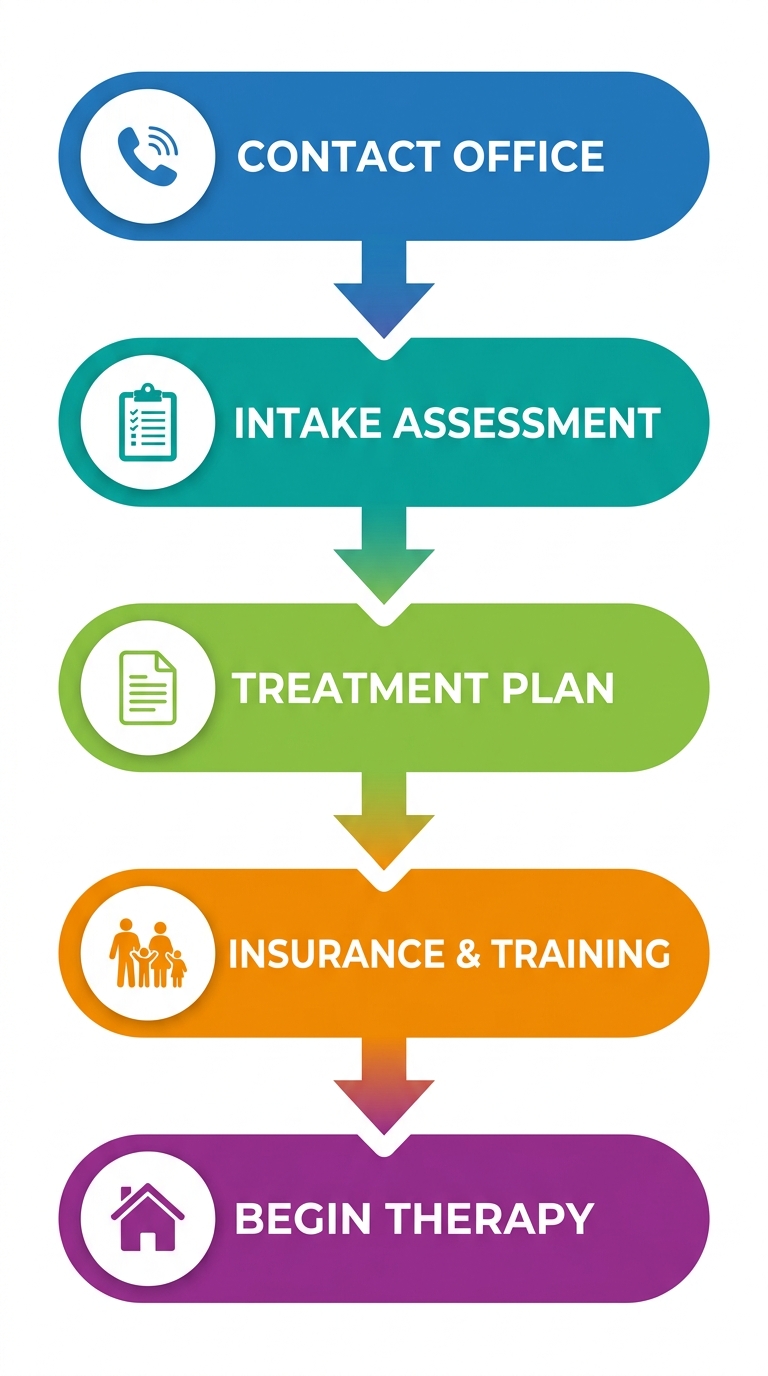
The first step is a simple, no-pressure intake where you share your child’s story and your family’s goals. You’ll fill out a brief form online, and our team will follow up with a phone or virtual consultation to learn more about your concerns and answer any initial questions, according to All About ABA’s client onboarding process. From there, we schedule an in-person, play-based assessment led by a Board Certified Behavior Analyst (BCBA), a professional governed by the ethical guidelines of the Behavior Analyst Certification Board (BACB).
This assessment is designed to feel like natural play, allowing our clinician to observe your child’s strengths, preferences, and areas where they need support. Typically lasting 2–3 hours, the session involves your child interacting with toys and activities while the BCBA gathers information, all with you present. This individualized approach ensures the resulting treatment plan is truly tailored to your child, built on a foundation of trust and collaboration rather than a generic template.
Does a Child Need a Diagnosis for ABA Therapy?
A common worry for parents is whether a formal diagnosis is required to start. At All About ABA, a medical diagnosis is not mandatory to begin services. We understand that waiting for a formal evaluation can be stressful, and early intervention is key. If your child has a developmental concern, a doctor’s referral, or a screening that indicates a need, we can proceed. Our programs are specifically designed for aba therapy autism children, but we are here to support any family navigating developmental challenges, providing guidance without adding unnecessary hurdles to your journey.
ABA therapy journey from intake through play-based learning
The path from initial concern to a personalized plan is straightforward and family-centered, removing barriers so your child can access support sooner. This streamlined process reflects our commitment to making expert care accessible when families need it most.
The Timeline: How Long Does ABA Therapy Take?
ABA is not a one-size-fits-all sprint; it’s a marathon tailored to your child’s unique pace. Because every child learns differently, the duration of therapy varies based on their individual goals, the intensity of sessions, and how consistently skills are reinforced at home. Research from the National Center for Biotechnology Information (NCBI) confirms that early and intensive behavioral intervention can lead to significant improvements, but meaningful change is an ongoing journey. Many families report seeing progress in communication or daily living skills within the first 3–6 months, though our team continuously monitors data and adjusts the plan to ensure your child is always moving forward.
Play-Based Learning and Generalization in Daily Life
A core part of our approach is naturalistic teaching, which simply means we embed learning into play. Rather than sitting at a table with flashcards, your child’s therapist follows their lead—turning a game of cars into a lesson on requesting or a tea party into a social interaction opportunity. This child-led method builds motivation and makes sessions feel fun, not like work. Academic evidence supports that learning through natural routines significantly enhances skill generalization. We actively practice these emerging skills across multiple settings—your home, our clinic, and out in the community—so your child can confidently use them, whether they’re greeting a neighbor or asking for a snack at the park. This is how we ensure therapy creates real-world results that last.
Best Practices for Families Starting ABA Therapy
Beginning your child’s journey with ABA therapy for children is a significant and hopeful step, and we’re here to ensure you feel confident and prepared from the very start. This spring is the perfect time to take that first action. At All About ABA, we believe that well-informed and supported families are the strongest partners in therapy, and the preparation you do now will build a powerful foundation for lasting, meaningful progress.
How to Prepare for the First Steps
Walking into an initial intake and assessment can feel like a big moment, but a little preparation goes a long way. We recommend bringing a few key items: a copy of your insurance card, any previous therapy records or diagnostic reports, and a simple, written list of your child’s strengths, favorite activities, and current challenges. This head start helps us get to know your child right away. The clinical intake process often includes a functional behavior assessment (FBA) to understand the reasons behind behaviors and, just as importantly, a preference assessment to discover what motivates your child and makes learning fun.
It’s also your chance to interview us. We encourage you to ask questions like, “How do you handle challenging behaviors in a gentle, supportive way?” or “What does a typical therapy session look like for a child my age?” It’s also wise to ask how progress is measured and how providers ensure their approaches are based on solid evidence. You can even ask if their clinical team regularly reviews findings from biomedical research databases to stay current with the latest, most effective strategies. These conversations build trust from day one.
Embracing Your Role in the Therapy Journey
Your role as a caregiver is the most vital component of your child’s success. Therapy doesn’t just happen during scheduled sessions; it grows in the small, everyday moments you share. To help skills stick, we encourage families to set aside just 10 to 15 minutes each day to practice a strategy learned during parent training, like using a simple visual schedule at home or offering specific, enthusiastic praise for a positive behavior. This consistent reinforcement is key to generalization, which means helping your child use new skills naturally with different people and in different places, not just at the clinic table.
We also love the idea of keeping a small journal. Jot down quick questions that pop up during dinner, a new behavior you observed at the park, or a moment of unexpected success. When you bring these notes to your next meeting with your therapy team, it turns every session into a rich, collaborative problem-solving opportunity. We’re your partners, and your insights are our most valuable data.
Choosing the Right Partner: What to Look For
Selecting a provider is a deeply personal decision, and knowing what to look for can bring clarity. First and foremost, confirm that the program is supervised by board-certified behavior analysts (BCBAs) who adhere to the rigorous ethical and professional standards set by the association for behavior analysis international. This ensures your child’s plan is designed and overseen by highly qualified experts. We recommend asking directly about the ratio of direct therapy hours to supervision and how often a BCBA will be present to update goals and coach your family.
A truly collaborative provider will also offer services in your natural environment. Be sure to ask if they provide in home aba therapy, as this allows the clinical team to work on skills like mealtime routines, independent play, or toothbrushing right where they naturally occur. The strongest partnerships are built on open communication, shared goals, and a mutual commitment to celebrating your child’s growth in every setting. Now that you know how to prepare and what to seek in a partner, let’s walk through what a typical therapy day looks like, so you feel ready for the wonderful work ahead.
Supporting Every Child's Growth in Spring
As we’ve seen, spring is a wonderful time to support your child’s growth. The season naturally opens doors for aba therapy for children spring, bringing sessions to parks, backyards, and community playgrounds where new skills truly come to life. Our approach is grounded in evidence-based methods, drawing on practices validated by biomedical research databases and implemented by caring professionals who prioritize your child’s success.
Key Takeaways for Families in Spring
- ABA therapy helps children generalize skills in real-world spring settings like parks and playgrounds, a core component of aba therapy autism children programs.
- Child-led naturalistic therapy keeps children engaged and motivated during spring activities, transforming everyday moments into learning opportunities.
- Family guidance empowers parents to reinforce learning during spring routines, creating consistency and confidence.
- Our personalized programs adapt to each child’s unique needs, following best practices set by the association for behavior analysis international to ensure quality care.
Ready for a Partner on Your Child's Journey?
Start Your Child’s Journey with a team that feels like family. We bring in home aba therapy to your doorstep, integrating support into the moments that matter most. As a practice trusted by many insurance companies and with multiple U.S. locations, we’re ready to support your family in your community. We’re All About You, Your Family, and Your Child. We create a warm and supportive space where every need is heard and every step is taken with care - because your journey matters. Reach out today, and let’s grow together. Promoting First Moments and Family Smiles Everywhere.